
Last updated October 10, 2026
Free roof inspection with deck photos before we talk money - GAF and Owens Corning certified installation
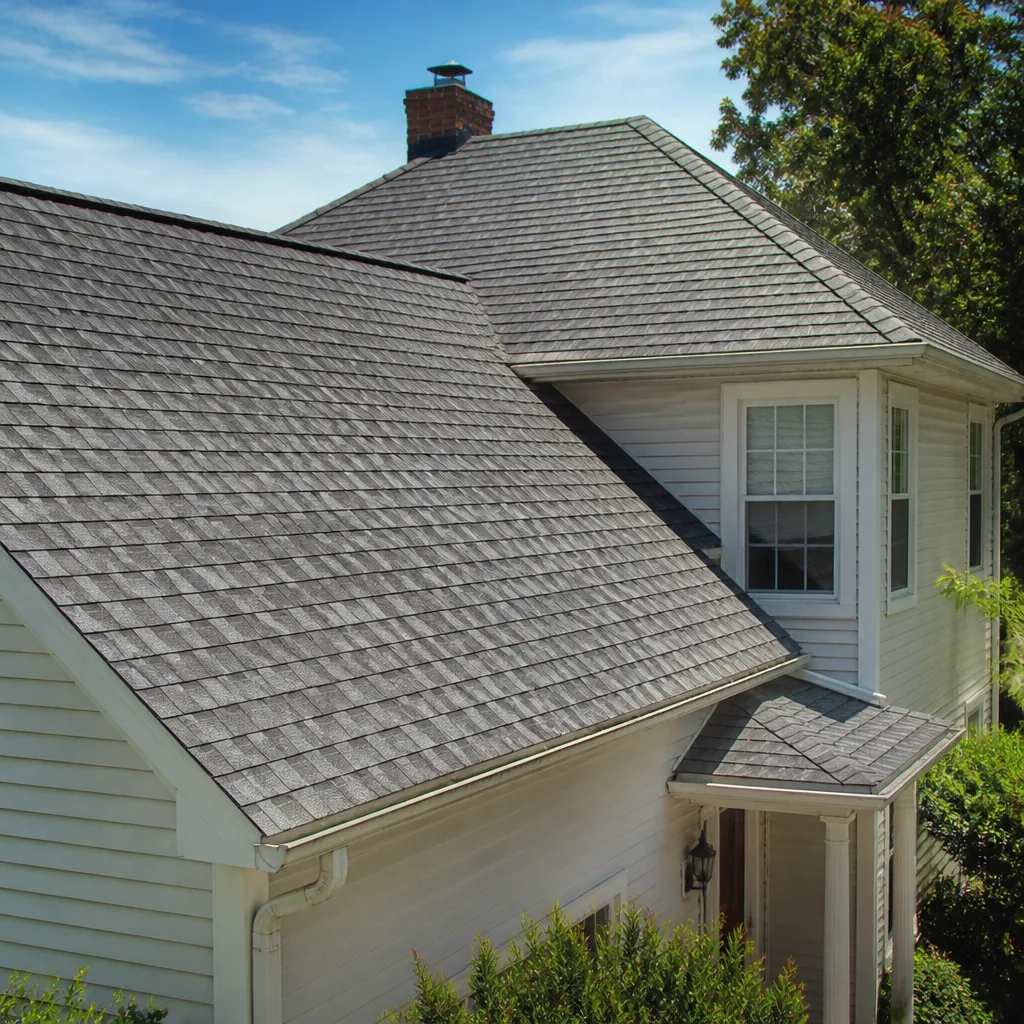
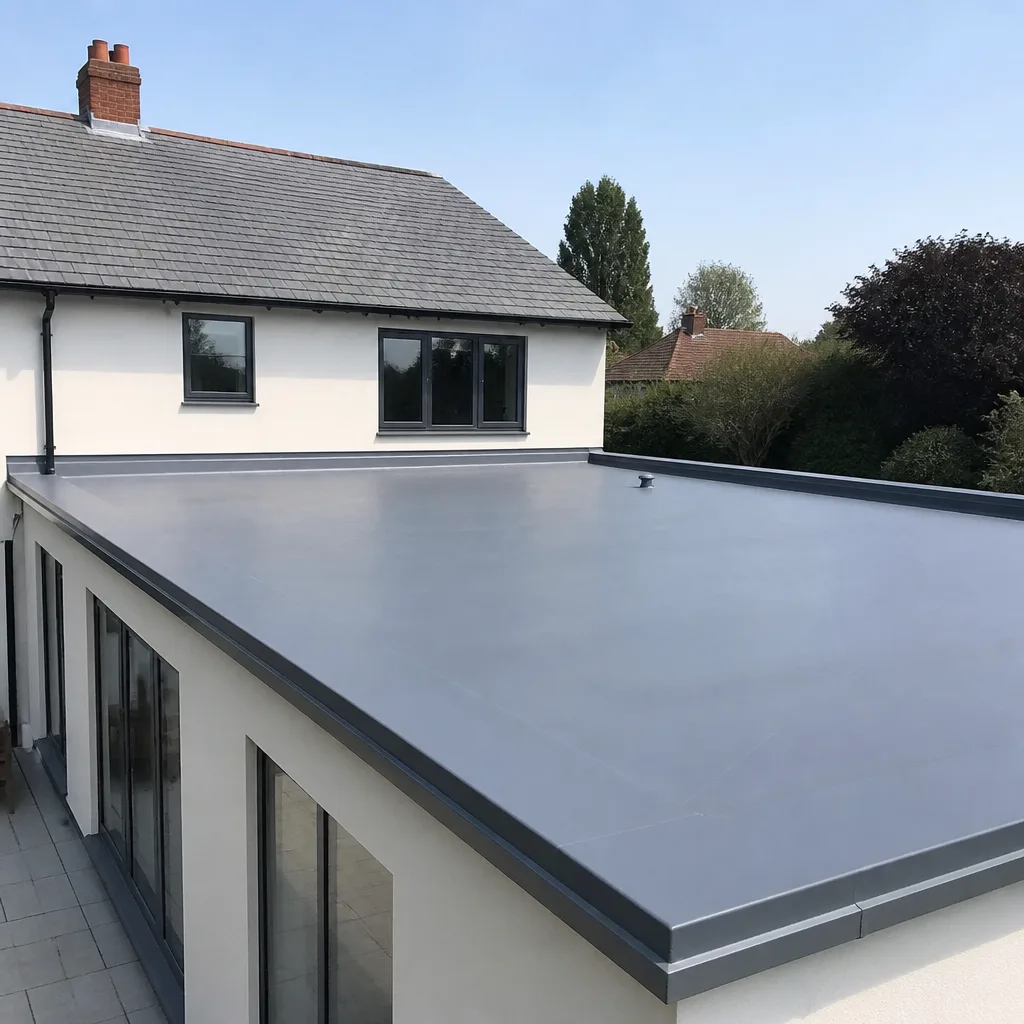
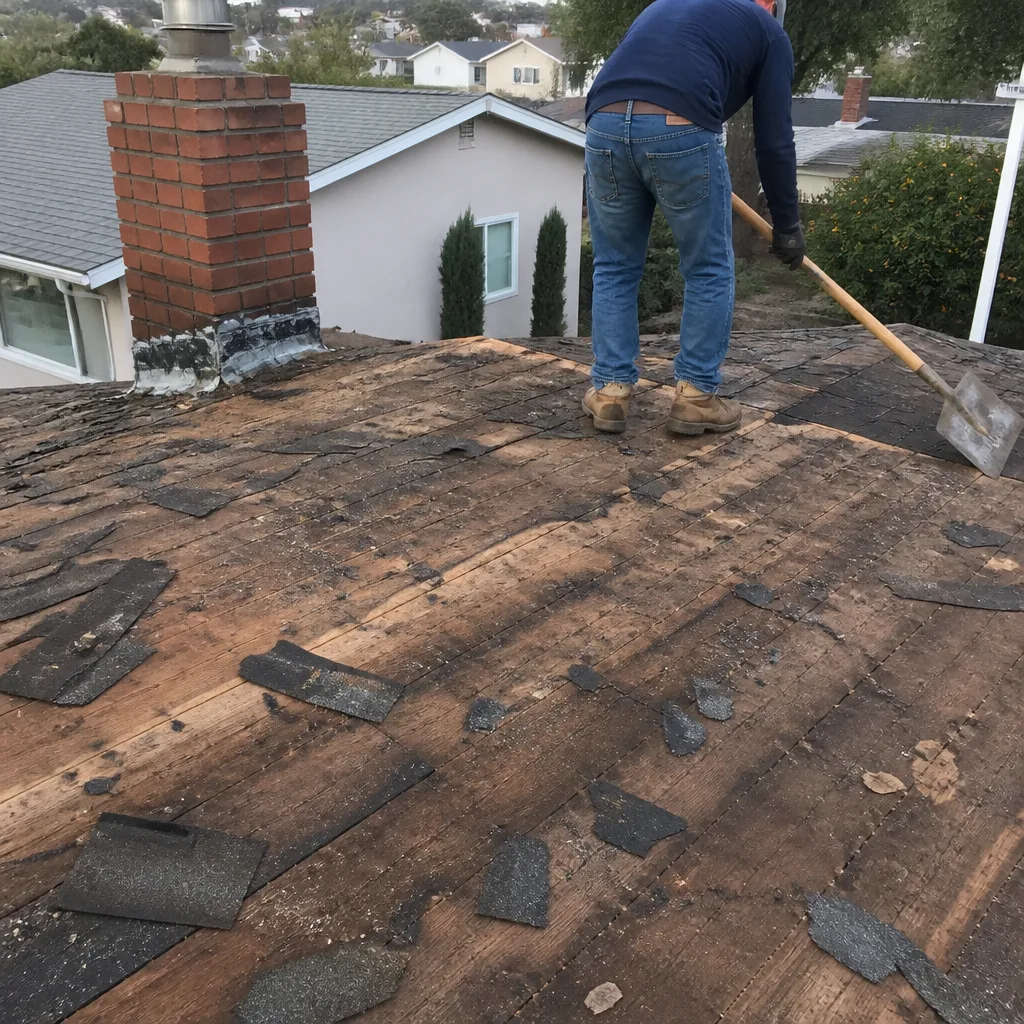 Before
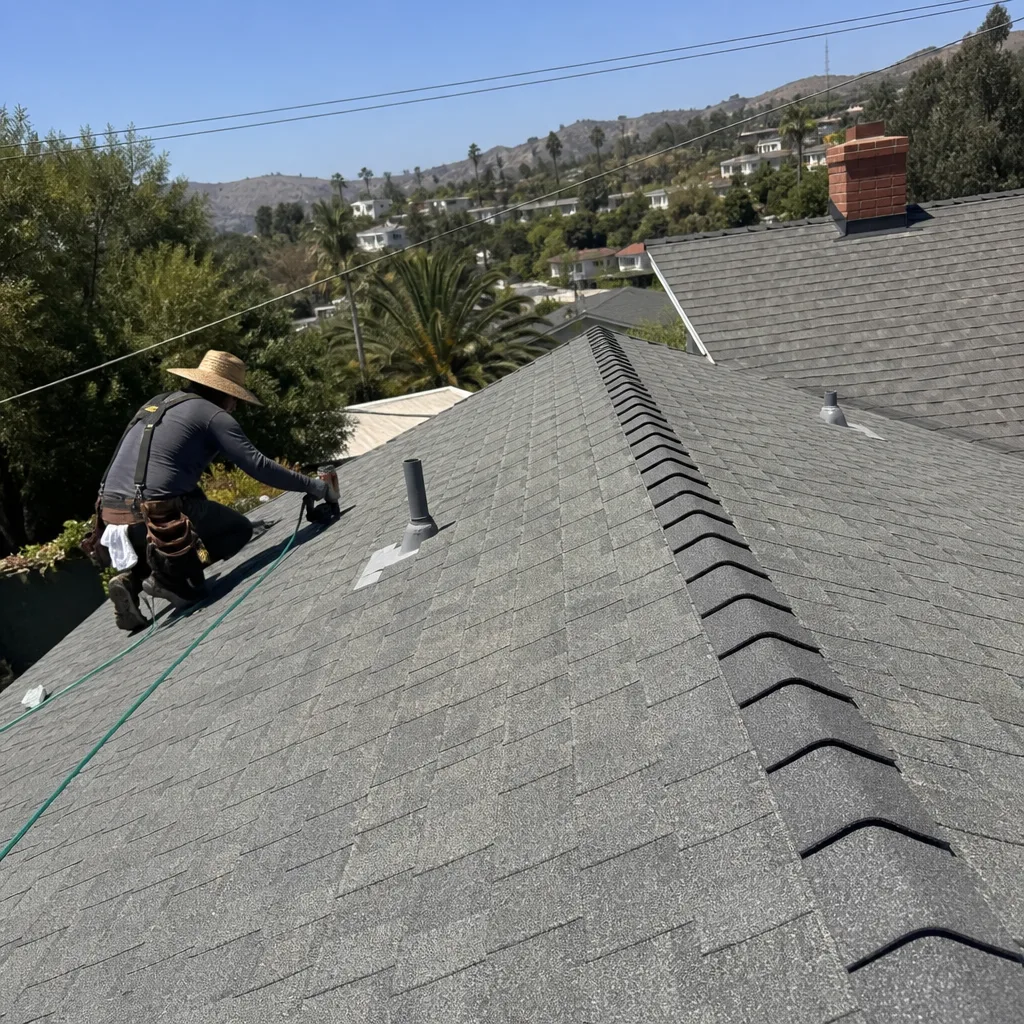 After
After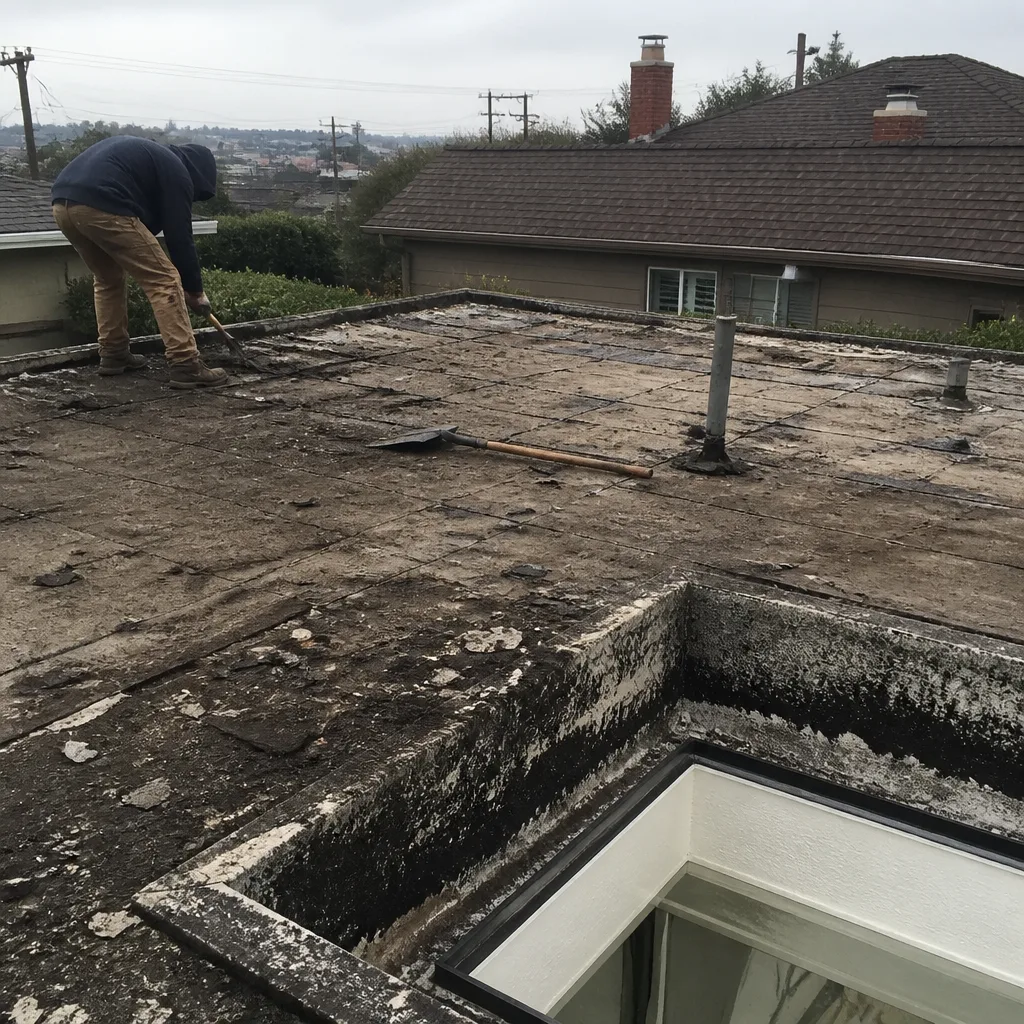 Before
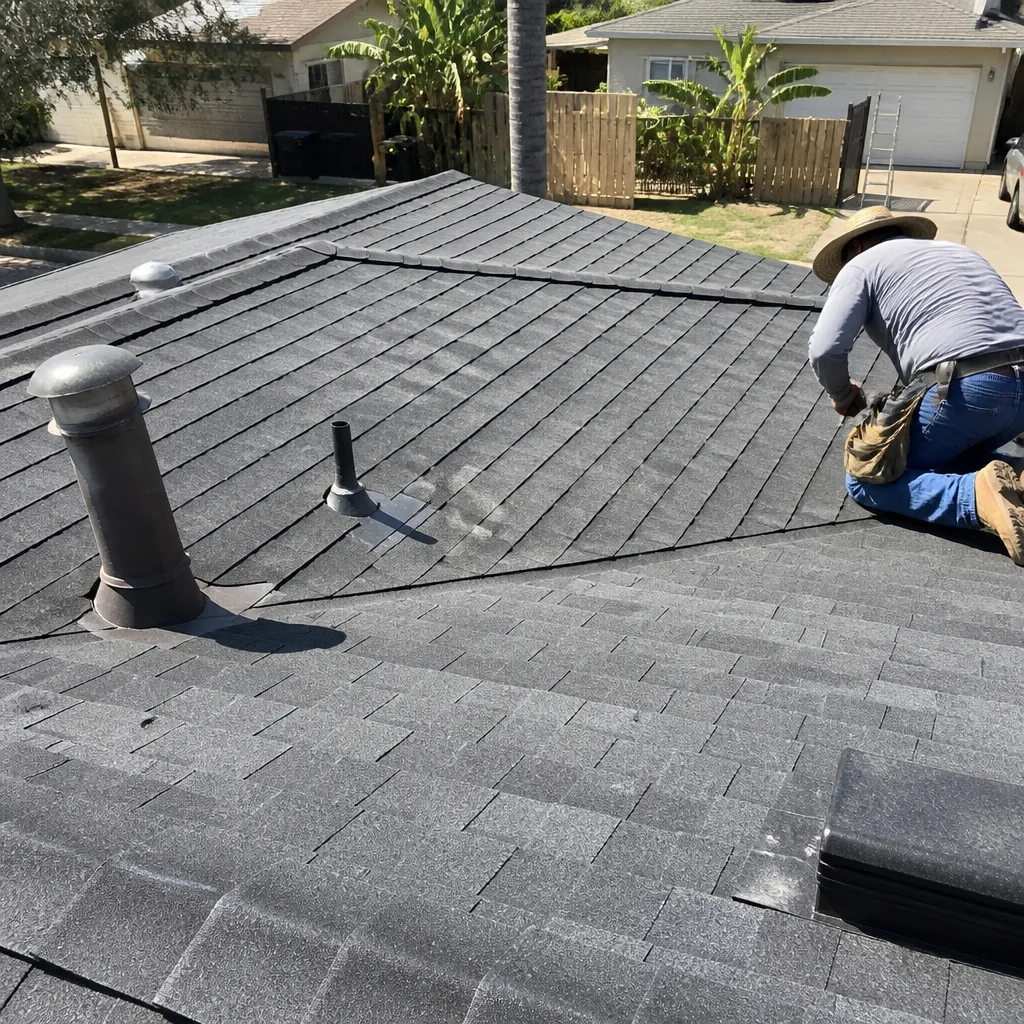 After
After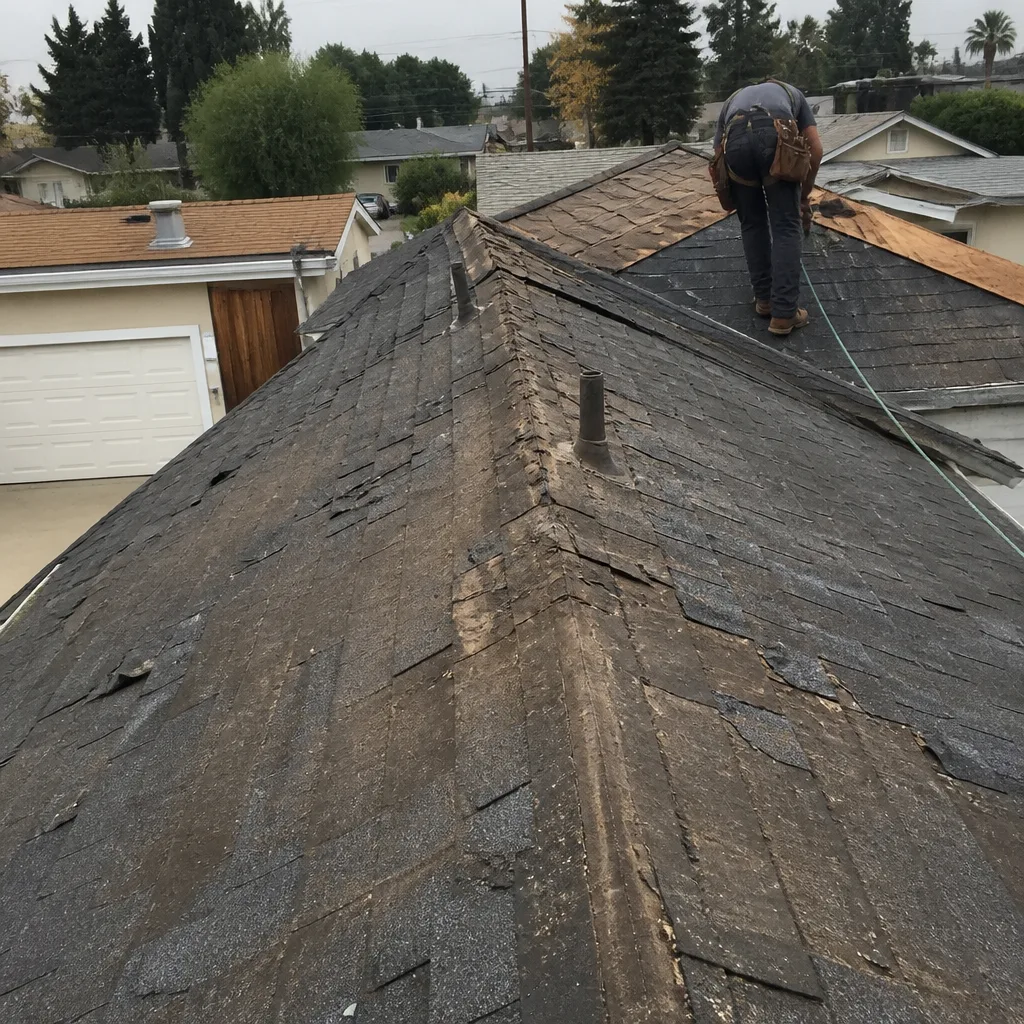 Before
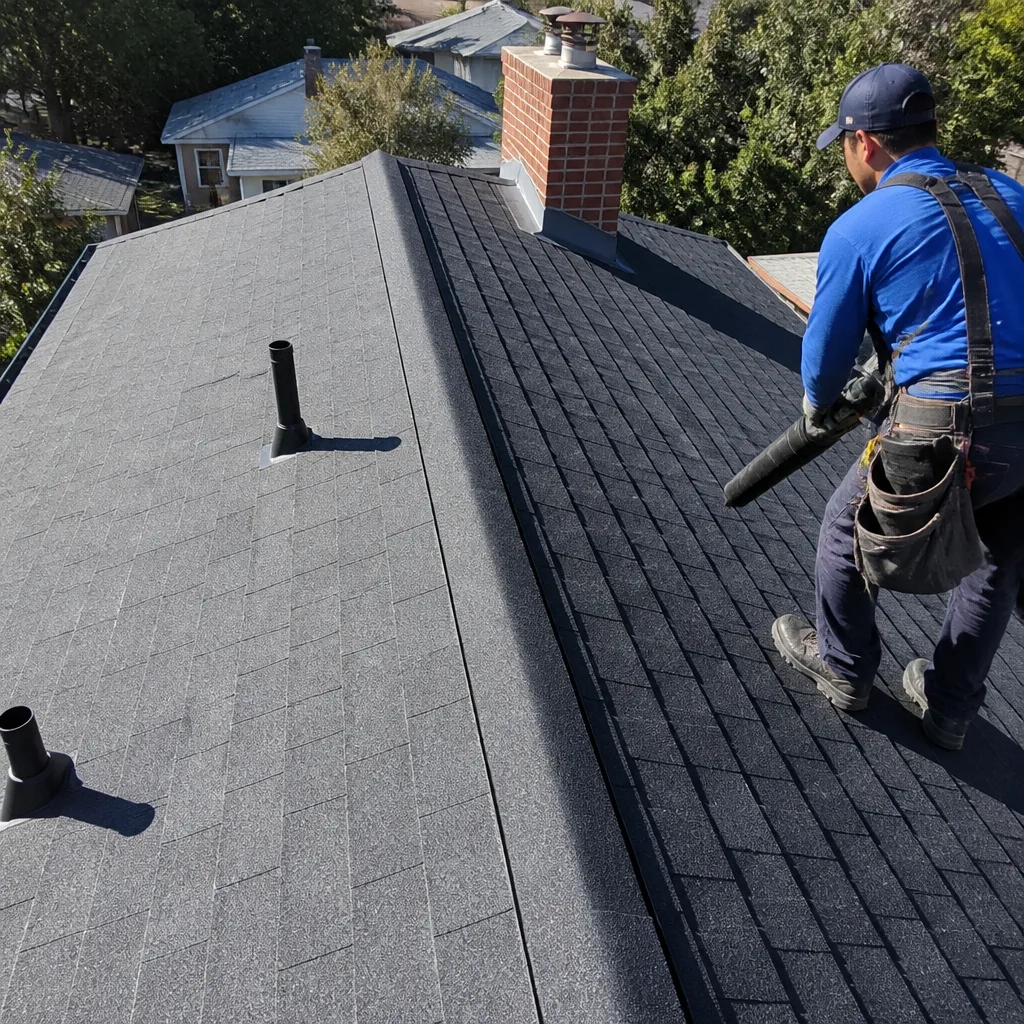 After
AfterDIY vs Professional Roof Repair: What’s Safe to Do Yourself
Replacing three asphalt shingles yourself is legal, safe, and genuinely fine – but if those shingles sit in a fire-rated zone under California Building Code, the same DIY patch can void your certificate of compliance and complicate a future home sale. In Los Angeles, where wildfire defense zones cover broad swaths of the San Fernando Valley, Pacific Palisades, and Topanga, the stakes of a “simple” roof fix are higher than most homeowners realize. This guide draws the legal and safety line precisely, so you know exactly what to attempt and what to hand off before you void your insurance or put yourself on a ladder you shouldn’t be on.
Quick Answer
Four roof repairs are genuinely DIY-safe in Los Angeles: gutter resealing, exposed nail backing, single-tab shingle swaps on low-slope sections, and pipe boot caulking. Everything else – including valley flashing, step flashing, flat roof membrane work, ridge cap replacement, and skylight resealing – should go to a licensed roofer because of fall risk, code compliance requirements, or insurance policy exclusions for owner-performed work. For these situations, explore DIY vs Professional Roof Replacement: What’s Safe to Do Yourself to understand the risks. If your roof pitch exceeds 4:12, hire a professional regardless of the repair type.
Table of Contents
- How to Measure Your Roof Pitch From the Ground
- The Four DIY-Safe Repairs (With Real Time and Cost Estimates)
- The Five Deceptively Dangerous Repairs
- Insurance Policy Language That Voids Coverage for DIY Roof Work
- Fire Rating and Code Compliance in Los Angeles
- The True Cost: DIY vs. Professional in Los Angeles
- Common Mistakes to Avoid
- When to Call a Professional
- Frequently Asked Questions
How to Measure Your Roof Pitch From the Ground
Roof pitch is expressed as a ratio of vertical rise to horizontal run. A 4:12 pitch rises 4 inches for every 12 inches of horizontal distance. That doesn’t sound steep until you’re standing on it. Most adults lose secure footing between 4:12 and 6:12, and by 8:12 you’re sliding unless you’ve got roofing boots and experience.
Here’s how to measure yours without leaving the ground:
- Stand back and sight the roofline. Hold a level horizontally at arm’s length, aligning it with the roof edge.
- Measure vertical rise. Have someone measure straight down from the level to the roof surface at exactly 12 inches out from the wall. That number in inches is your pitch ratio (e.g., 5 inches = 5:12).
- Check multiple roof planes. Los Angeles homes often have additions with mismatched pitches. The main roof might be 4:12 while a rear dormer hits 8:12.
- When in doubt, assume it’s steeper. Aging eyes and distance distort perception. If you’re guessing between 4:12 and 5:12, treat it as 5:12.
The 4:12 threshold matters for two reasons. First, OSHA considers roofs above this pitch elevated work requiring fall protection for professionals. Second, most homeowner’s insurance policies contain language excluding liability for injuries during owner-performed work above this slope. In our experience across Los Angeles, from the flat-roofed Spanish Revival homes in Hancock Park to the steep pitches in the Hollywood Hills, homeowners consistently underestimate their roof pitch by one full ratio point.
If your measurement comes back 5:12 or higher, every repair on this guide moves to the “call a pro” column. No exceptions. The cost of a professional repair is always less than an ER visit or a wrongful death claim.
The Four DIY-Safe Repairs (With Real Time and Material Estimates)
These four repairs share three traits: they’re on accessible low-slope sections (4:12 or below), they don’t involve structural or waterproofing critical areas, and they won’t trigger insurance or code compliance issues if done competently.
1. Gutter Resealing at End Caps and Joints
Gutter leaks at end caps and slip joints are cosmetic annoyances that can turn into fascia rot. The fix is straightforward: remove old caulk with a putty knife, clean with mineral spirits, apply fresh polyurethane gutter sealant, and tool smooth.
Time: 45 minutes per joint.
Materials: $12 – $18 for sealant and a basic tool.
Skill level: True beginner.
Work from a ladder, not the roof. In Los Angeles, where we get intense sun followed by winter rain, gutter sealant degrades faster than in milder climates. Check your work after the first good rain.
2. Exposed Nail Backing
Nails that have backed out through shingles create pinpoint leaks. The fix: lift the shingle tab gently, drive the nail flush with a hammer, cover the head with roofing cement, and press the tab back down.
Time: 10 minutes per nail.
Materials: $8 for a tub of roofing cement.
Skill level: Beginner with basic tool comfort.
Only attempt this on shingles you can reach from a secure ladder position. Don’t walk the roof for this. Los Angeles heat cycling makes nail backing common; it’s also a sign your shingles may be approaching replacement age.
3. Single-Tab Shingle Swap on Low-Slope Sections
A wind-torn or cracked tab on a 4:12 or lower roof can be replaced if the surrounding shingles are pliable and the underlayment is intact. You’ll need a flat bar, roofing nails, and matching shingles.
Time: 30 – 45 minutes for the first one, 15 minutes after that.
Materials: $25 – $40 for a bundle of shingles (you’ll use 3 – 4 tabs), plus nails.
Skill level: Intermediate beginner.
The catch: matching weathered shingles is nearly impossible. A new Owens Corning or IKO tab will sit noticeably darker against sun-faded neighbors. In Los Angeles’s UV intensity, this color gap can last two years. Consider whether the visual mismatch bothers you before starting.
4. Pipe Boot Caulking
The rubber boot around plumbing vents cracks after 8 – 12 years in Los Angeles sun. If the boot itself is intact but the seal to the pipe has opened, a bead of high-temp silicone can buy 2 – 3 years.
Time: 20 minutes.
Materials: $10 – $15 for proper roof-and-gutter silicone.
Skill level: Beginner.
Work from a ladder extended above the roofline, or hire this out if the vent is more than 10 feet up. Don’t confuse this with replacing the boot itself, which requires removing surrounding shingles and belongs in the professional column.
The Five Deceptively Dangerous Repairs
These repairs look manageable on YouTube. They’re not. Each carries hidden risk that doesn’t show up until water is pouring through your ceiling or your insurance claim is denied.
1. Valley Flashing
Valleys – the channels where two roof planes meet – handle the highest water volume per square foot. A botched valley repair doesn’t leak gradually. It fails catastrophically in the first heavy rain. Worse, valleys in Los Angeles often involve layered underlayment requirements from the California Building Code that DIYers miss entirely. We’ve torn off valley “repairs” that directed water straight into wall cavities.
2. Step Flashing
Step flashing – the L-shaped metal pieces woven into each course of shingles where a roof meets a wall – requires removing multiple shingle courses to access. One misaligned piece and you’ve created a funnel into your framing. In Los Angeles’s older neighborhoods like Echo Park and Silver Lake, step flashing is often embedded in stucco that crumbles when disturbed.
3. Flat Roof Membrane (TPO, PVC, Modified Bitumen)
Flat roofs dominate Los Angeles commercial buildings and many Mid-Century Modern homes. Membrane repairs require heat welding or proper adhesive techniques that take months to learn. A patch that looks sealed to the eye often has voids that wick water laterally across the entire roof deck. By the time you see interior damage, the insulation is saturated.
4. Ridge Cap Replacement
Ridge caps sit at the peak, which means you’re working at the highest point on the steepest section. The “simple” repair of replacing a few ridge shingles requires removing existing fasteners without tearing adjacent caps, cutting new pieces to fit irregular pitches, and sealing under high wind exposure. Falls from ridges are disproportionately fatal because of the height and angle.
5. Skylight Resealing
Skylight leaks are almost never fixed from the outside. The water path typically runs from the uphill edge, travels under the flashing, and exits somewhere downhill. Caulking around the visible frame traps water inside. Proper repair requires removing the skylight, replacing the ice-and-water shield, and reinstalling with correct overlap sequencing. In Los Angeles, where skylights are common for natural light and energy code compliance, we’ve seen dozens of “resealed” skylights that leaked worse after the DIY attempt.
Insurance Policy Language That Voids Coverage for DIY Roof Work
Before you touch anything, pull your homeowner’s policy declarations page and look for these specific clauses. They’re standard in California policies and heavily enforced after wildfire losses.
“Work performed by unlicensed persons” – Most policies exclude damage resulting from work not performed by a C-39 licensed contractor. The exclusion often applies even if the DIY work wasn’t the direct cause of the loss. If your DIY nail backing is visible when an adjuster inspects fire damage, the entire roof claim can be questioned.
“Failure to maintain fire-resistant construction” – In Los Angeles County fire hazard severity zones, this clause requires that all roof repairs maintain the original Class A, B, or C fire rating. Using non-rated materials or improper installation techniques voids this compliance.
“Negligence or willful misconduct” – Broad exclusion that insurers invoke when owners perform work outside their expertise. A fall injury to a helper, damage to a neighbor’s property from falling debris, or subsequent water damage can all trigger this.
“Warranty and maintenance requirements” – Some policies require annual professional roof inspections. DIY repairs without documentation can void these requirements.
Call your insurance agent and ask directly: “Does my policy exclude damage related to owner-performed roof repairs?” Get the answer in writing. In our experience, most Los Angeles homeowners are surprised by the answer.
Fire Rating and Code Compliance in Los Angeles
California Building Code Chapter 7A establishes wildfire-urban interface requirements that apply to broad sections of Los Angeles County. If your home is in a Very High Fire Hazard Severity Zone – check the Cal Fire map – your roof assembly must maintain its tested fire rating without modification.
Here’s what that means practically:
- Class A rated assemblies (common with Owens Corning, Atlas, and Tamko fiberglass shingles) cannot have penetrations sealed with non-rated materials. That “simple” caulk job around a vent? If the caulk isn’t part of the original assembly test, you’ve altered the rating.
- Tile roofs in fire zones require specific underlayment and fastening patterns. A homeowner replacing broken tiles with mismatched fasteners or skipping underlayment patches creates a code violation visible to any inspector.
- Certificate of Compliance is required for home sales in many Los Angeles jurisdictions. DIY roof work without permit documentation can delay or derail a sale, especially in competitive markets where buyers waive inspection contingencies but still review compliance records.
Los Angeles City and County both participate in the Cal Fire brush clearance program, which includes roof inspections. A failed inspection for fire rating compliance can result in mandatory professional remediation with accelerated timelines and no contractor choice.
The True Cost: DIY vs. Professional in Los Angeles
The math most homeowners do is incomplete. They compare material cost to a contractor’s quote and stop there. Here’s the full accounting for a typical minor repair scenario in Los Angeles.
| Cost Factor | DIY Approach | Professional Repair |
|---|---|---|
| Materials for single-tab shingle swap | $25 – $40 | Included in labor |
| Tools (if not owned) | $80 – $150 | Not applicable |
| Ladder rental or purchase | $40 – $300 | Not applicable |
| Fall protection equipment | $100 – $250 | Not applicable |
| Professional labor | Your weekend | $180 – $450 for standard repair |
| Cost of getting it wrong (typical water damage repair) | $1,200 – $4,500 | Covered by workmanship guarantee |
| Insurance deductible if claim denied | $1,000 – $2,500 | Not applicable |
| Permit and inspection (if required) | $150 – $400 + your time | Handled by contractor |
The professional column at Roof Repair in Los Angeles includes something the DIY column can’t: the 365-Day Done Right Promise. If our repair fails, we come back free. If your DIY repair fails, you start over at full cost plus whatever damage occurred in the meantime.
In Los Angeles’s current market, where water damage restoration runs $45 – $75 per square foot and mold remediation starts at $2,000, a single misaligned shingle can trigger five figures in secondary damage. The “savings” of DIY evaporate fast.
Common Mistakes to Avoid
- Walking a roof in dew or light rain. Los Angeles morning marine layer leaves roofs slick until 10 a.m. near the coast. Falls happen on apparently dry surfaces.
- Using interior caulk on exterior roof penetrations. Silicone bathroom caulk degrades in UV within months. Use only products rated for roof exposure.
- Nailing through shingles instead of under them. Exposed nail heads create new leak points. Every fastener on a shingle roof must be hidden.
- Ignoring the real source of a leak. Water travels. The stain on your ceiling is rarely directly below the roof penetration. We’ve seen homeowners patch three wrong spots while the actual leak ran from a valley 15 feet away.
- Working without a spotter. Someone on the ground isn’t just for handing up tools. They’re for calling 911 when you can’t.
- Matching new shingles to old without checking manufacturer. An Atlas shingle has different exposure and thickness than an IKO shingle from a different era. Mismatched repairs create visual ridges and wind vulnerabilities.
- Skipping the permit for work that requires it. Los Angeles requires permits for roof repairs exceeding 100 square feet or involving structural members. Unpermitted work must be disclosed in home sales and can trigger retroactive compliance orders.
When to Call a Professional
Call a licensed roofer when: your pitch exceeds 4:12; the repair involves flashing, valleys, ridges, or penetrations; your home is in a Very High Fire Hazard Severity Zone; your insurance policy excludes owner-performed work; the repair area exceeds two square feet; or you can’t identify the exact leak source with confidence. You can reach us for our Roof Repair services any time these conditions apply.
Crestview Roofing offers free estimates in Los Angeles. Every estimate includes a written price before any work starts, a live trackable arrival time, and before-and-after photo documentation through The Relay Standard. Our technicians are background-checked and uniformed, and a live person answers calls 24/7 at (325) 246-5075. The 365-Day Done Right Promise covers every repair, including a free second visit if anything fails.
Frequently Asked Questions
Most likely yes, if the repair is minor, on a low-slope section, and uses like-for-like materials. But you must check your specific policy for “unlicensed work” exclusions, and you should photograph the before condition and your completed repair. Call your agent for written confirmation. For more guides & resources on navigating insurance and repairs, visit our blog. For anything beyond two or three tabs, call (325) 246-5075 for a free estimate – estimates are free and come with a written price.
Most standard repairs run $180 – $450, with complex flashing work or steep-access jobs reaching $600 – $1,200. Full valley replacements on larger homes can run higher. At Crestview Roofing, the written price we deliver before work starts is the number on the invoice – no change orders, no surprises. Call (325) 246-5075 for an exact quote on your specific repair.
Not with Crestview Roofing. Our written price is fixed. The only exception is if we discover concealed damage that was impossible to assess during inspection – rot under shingles, for example – and even then, we document it with photos and get your approval before proceeding. No surprises is part of The Relay Visibility Guarantee.
Repairs under 100 square feet on existing roofs generally don’t require permits. Work exceeding that threshold, or involving structural members, new penetrations, or fire-rated assembly changes, does require permitting through LADBS or your local jurisdiction. We pull permits on every job that requires them and handle inspection scheduling. Call (325) 246-5075 and we’ll tell you whether your specific repair needs a permit.
Measure from the ground using the level method described above. If your pitch is 4:12 or below and you have secure ladder access, you can consider limited DIY work. At 5:12 or above, hire a professional. At 7:12 or above, even most roofers use fall protection. Your comfort on a ladder is not a reliable indicator – adrenaline and overconfidence kill.
Insurance denial after a subsequent loss. If your DIY repair is visible when an adjuster inspects fire or storm damage, the insurer may invoke the “unlicensed work” or “negligence” exclusion and deny the entire claim, not just the repair portion. That potential exposure dwarfs any labor savings. For the cost certainty of a guaranteed professional repair, call (325) 246-5075.
The Bottom Line
DIY roof repair in Los Angeles is legally possible for four specific, limited tasks on low-slope, accessible sections. Everything else crosses into territory where fall risk, insurance exclusions, and California fire code compliance make professional work the only rational choice. The real question isn’t whether you’re handy enough – it’s whether you can absorb the cost of getting it wrong, in a market where water damage restoration runs to the tens of thousands and insurance denials are permanent. Measure your pitch, read your policy, and know your limits. When the repair exceeds them, a written-price professional repair with a 365-day guarantee is the only option that protects your home, your coverage, and your safety.
Written by Dylan Pace, Owner at Crestview Roofing, serving Los Angeles since 2000.